


TF 500
Superior Value, Maximum Uptime, and Mission Reliability
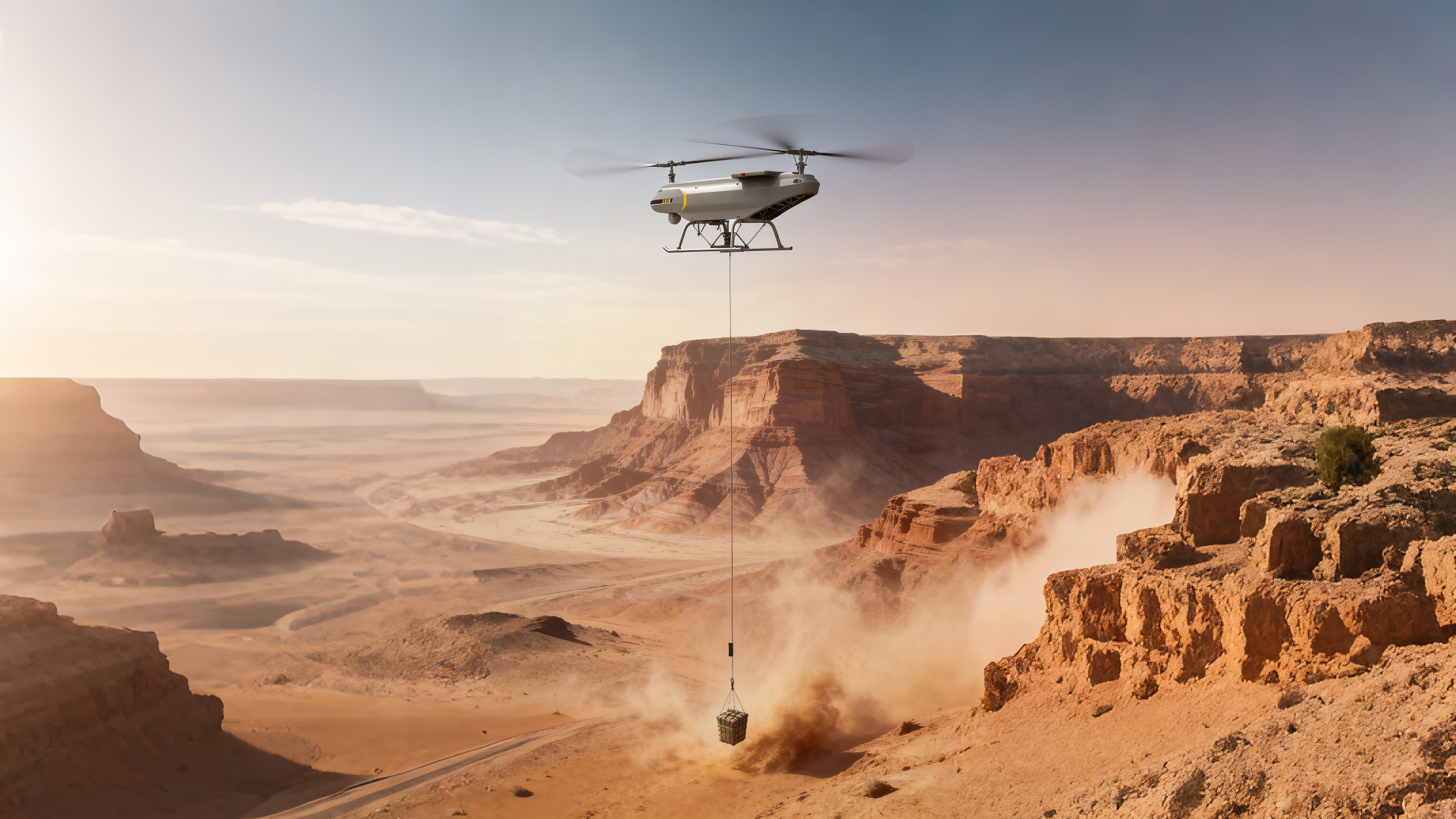
The TF 500 Heavy-Duty Unmanned Helicopter features a tandem rotor layout and a dual-redundancy flight control system, delivering core capabilities such as fully autonomous takeoff and landing, aerial hovering, precision pinpoint delivery, and emergency return-to-home. Benefiting from exceptional environmental and site adaptability, it excels in a wide range of specialized low-altitude logistics missions, including: transportation of engineering equipment and spare parts, urban and wildland firefighting, resupply operations, medical evacuation (MEDEVAC), emergency rescue, and communications relay. Its versatility further extends to innovative applications such as weather modification and scientific research payload integration.
Performance Specifications
-
型号TF500
-
Maximum Takeoff Weight560 kg
-
Total Load(Fuel Weight+Payload)260 kg
-
Endurance240 kg - 1 h,200 kg - 3 h
-
External Power Supply Module: Supported28 V - 2 kW
-
Std Comm Link Range30 km(Std),100 km(Opt)
-
Maximum Usable Fuel Capacity100 L
-
Maximum Hover Ceiling6500 m
-
Cruise Speed80-100 km/h
-
Velocity Never Exceed144 km/h
-
Flight Management System ModeAuto-Land / Takeoff, Cruise, Hover, Return to Base,Waypoint Navigation, Emergency Return.
-
Global Navigation Satellite SystemGPS/BDS,INS
-
Wind LimitTakeoff/Land≤ Beaufort 6,Cruise≤ Beaufort 8
-
Operating Temperature Range-20°C ~ 55°C
-
Fuselage Dimensions(Length, Width, Height)3.8m*1.5m*1.85m
Environmental Suitability
Highlands, Snowfields, Gobi Deserts, Sandy Plains, Grasslands, Woodlands, Mountainous Terrain, Maritime Areas, and Riverine Zones
Application Fields
Cargo Transportation, Fire & Rescue, Wildland Firefighting, Medical Evacuation (MEDEVAC), Communications Relay, Power Grid Infrastructure, Geological Surveying, and Mineral Exploration & Prospecting.
-
System Composition
- Integrated Support Command Vehicle
- Operational Team (2-3 Personnel)
- Data Link
- Ground Control Station (GCS)
- EO/IR Gimbal Pod
-
Available Payloads
- (EO/IR Gimbal Pod
- Aerial Delivery & Hoist Mechanism
- Hoist Cable
- Cargo Nets & Bulk Bags
- Firefighting Payloads & Bambi Bucket
- Communications Relay Equipment
- Satellite Communication Terminal
- Medical Evacuation Pod (MEDEVAC)
Technological Advancement
High-Reliability & High Environmental Adaptability Platform Technology — Fully Independently Developed System & Environmentally Adaptive Design
-
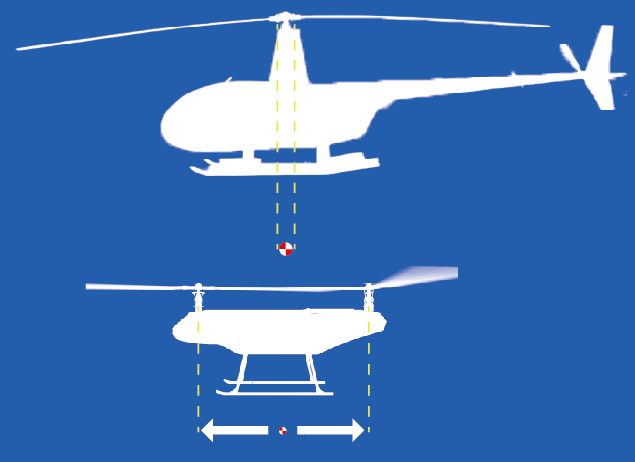 01Tandem Helicopter Overall TechnologyAdopting a tandem dual-rotor layout design, the front and rear rotors are arranged longitudinally to maintain fuselage stability, simplify structure, and reduce weight. The dual-rotor layout provides stronger aerodynamic stability; the increased rotor area enhances lift, and its wind resistance performance is superior to that of conventional single-rotor helicopters.
 -
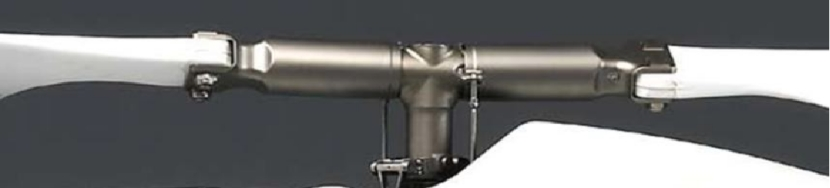
02Flexible Rotor Hub TechnologyIntegrated with elastic bearings, it realizes flexible flapping and lead-lag movements of the rotor blades, significantly reducing the number of mechanical components. The flexible rotor hub design lowers structural complexity; elastic materials can absorb high-frequency vibrations during rotor movement to achieve vibration suppression. Its rigid connection feature enables more direct transmission of blade pitch commands, reducing control delay and improving maneuverability.
-
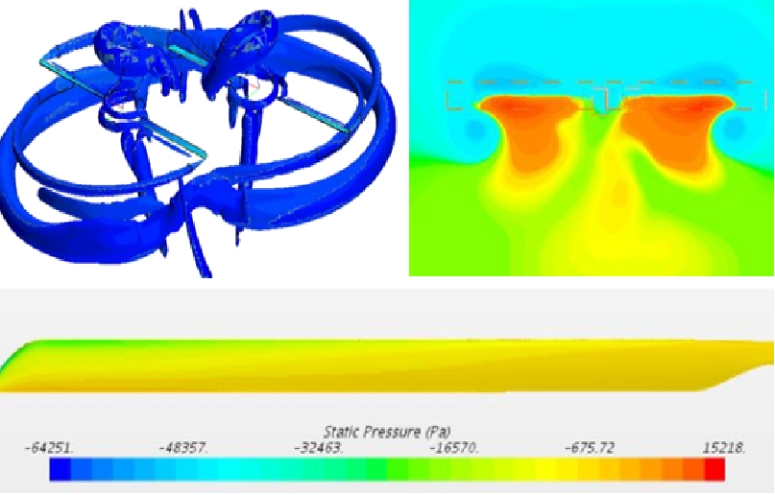 03High-Efficiency Rotor TechnologyThe rotor system adopts lightweight design technology, integrating the advantages of no tail transmission, no need for tail reducer and tail rotor. It avoids the risk of tail rotor failure, improves maneuverability, increases hover efficiency by 10%~15%, and features a compact structure and small overall size, adapting to shipboard environments with limited space.
 -
04Long-Distance High-Power Transmission TechnologyIt adopts high-torque brushless motors combined with high-power ESCs to achieve linear control of power output; the dual-motor redundant architecture can still maintain stable power output in case of failure; the lightweight transmission structure reduces aircraft weight and enhances transmission strength.

-
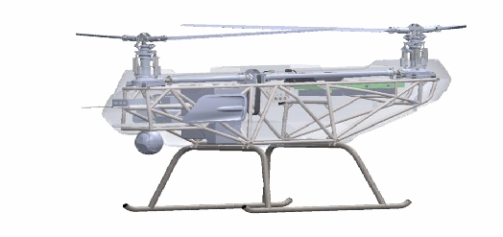 05Airframe Lightweight TechnologyComposite materials are used as the main load-bearing structure, reducing weight while improving strength; the modular design facilitates rapid replacement of mission modules and reduces the weight of redundant structures.
 -
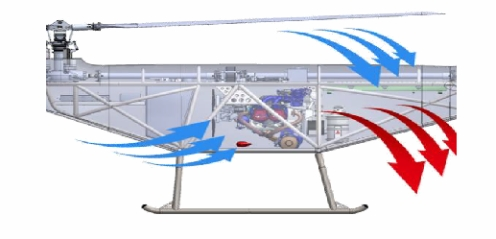
06Power Adaptability Modification TechnologyEquipped with dual-rotor power redundancy configuration, it can automatically redistribute power when a single motor fails, maintaining more than 80% of the load capacity, which is suitable for high-reliability scenarios such as material transportation.
High-Safety Intelligent Flight Control Technology
Fully Independently Developed System & Military-Grade Redundancy
The dual-redundancy flight control system has a hot-switching time of <100ms between the main and backup flight control computers, and can still maintain more than 80% of the control capability when a single system fails; power system fault tolerance: the tandem dual-rotor design allows automatic adjustment of power distribution when a single rotor fails to maintain hover stability. It supports autonomous mission execution, integrates core flight control technology, and enables fully autonomous takeoff and landing, precise fixed-point delivery, and emergency return.