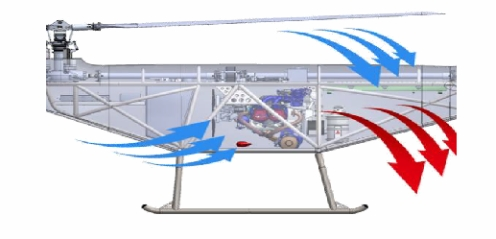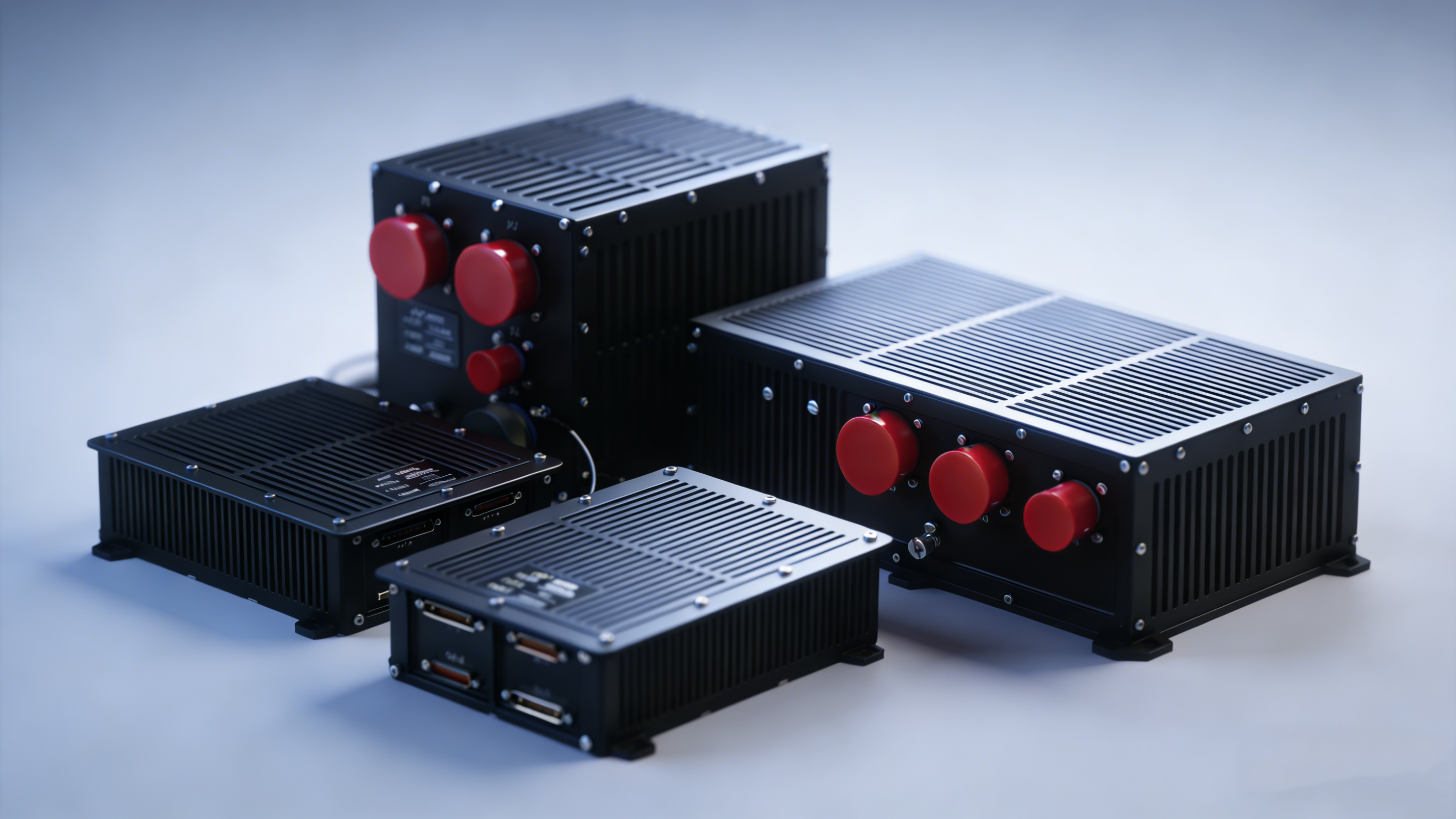




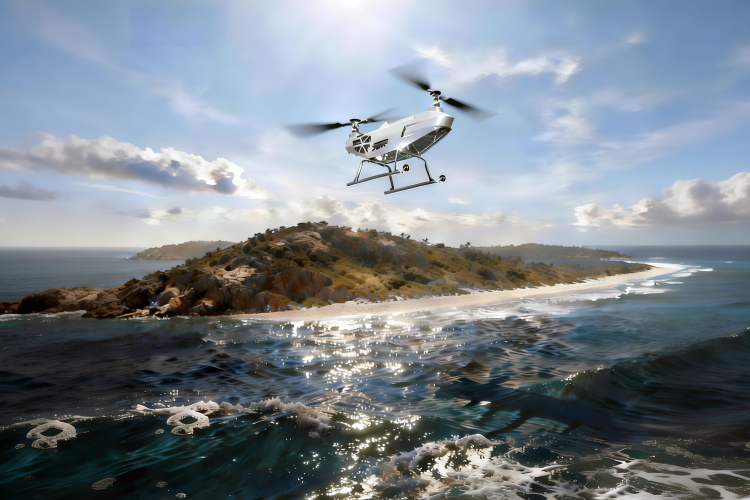
The TF 500A is a multi-purpose oil-powered unmanned helicopter independently developed by Tuohang Technology. Adopting a tandem longitudinal structure design, it features a powerful power system as well as excellent safety and reliability. This model can take off and land without a dedicated airport, with a maximum takeoff weight of 320 kilograms and a maximum effective payload of 140 kilograms. Under standard atmospheric pressure, when carrying a load of 100 kilograms, its maximum endurance can reach up to 3 hours, fully meeting various operational needs. The TF 500A supports multiple operation modes, including ground control station and emergency command vehicle, flexibly adapting to different operating environments. According to the needs of specific application scenarios, it can be equipped with a three-in-one EO/IR gimbal pod to realize multiple functions such as daily reconnaissance, patrol, monitoring and detection. At the same time, its excellent payload capacity also supports mounting exploration, detection and vegetation seeding equipment, expanding its application scope to geological exploration, mineral detection, ecological restoration and other fields.
-
型号TF500A
-
Maximum Takeoff Weight320 kg
-
Total Load(Fuel Weight+Payload)140 kg
-
Endurance120 kg - 1 h、100 kg - 3 h
-
External Power Supply Module: Supported12V,200W
-
Std Comm Link Range30 km(Std),100 km(Opt)
-
Maximum Usable Fuel Capacity50 L
-
Maximum Hover Ceiling1500 m
-
Cruise Speed80-100 km/h
-
Velocity Never Exceed120 km/h
-
Flight Management System ModeAuto-Land / Takeoff, Cruise, Hover, Return to Base,Waypoint Navigation, Emergency Return.
-
Global Navigation Satellite SystemGPS/BDS,INS
-
Engine TypeFour-stroke electronic fuel injection water-cooled engine
-
Startup MethodElectric Start
-
Fuselage Dimensions(Length, Width, Height)2.6m×0.6m×1.5m
-
System Composition
- Integrated Support Command Vehicle
- Operational Team (2-3 Personnel)
- Data Link
- Ground Control Station (GCS)
- EO/IR Gimbal Pod
-
Available Payloads
- (EO/IR Gimbal Pod
- Aerial Delivery & Hoist Mechanism
- Hoist Cable
- Cargo Nets & Bulk Bags
- Firefighting Payloads & Bambi Bucket
- Communications Relay Equipment
- Satellite Communication Terminal
- Medical Evacuation Pod (MEDEVAC)
-
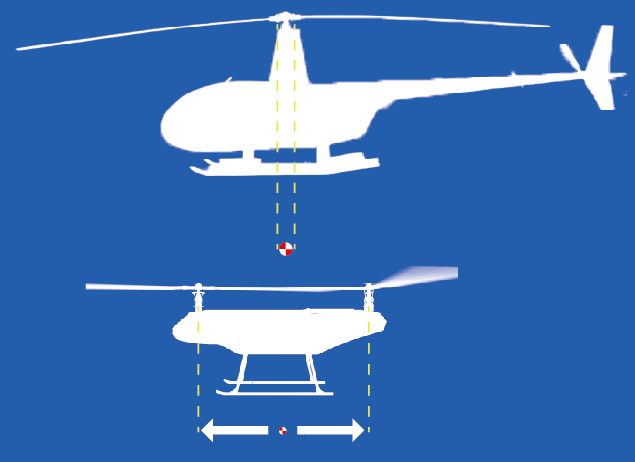 01Tandem Helicopter Overall TechnologyAdopting a tandem dual-rotor layout design, the front and rear rotors are arranged longitudinally to maintain fuselage stability, simplify structure, and reduce weight. The dual-rotor layout provides stronger aerodynamic stability; the increased rotor area enhances lift, and its wind resistance performance is superior to that of conventional single-rotor helicopters.
 -
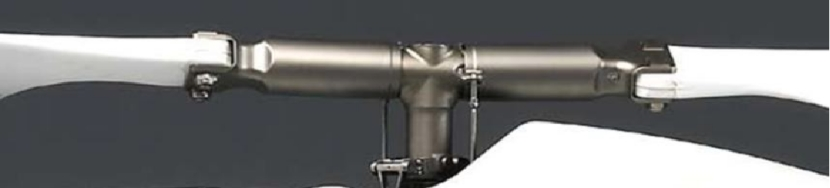
02Flexible Rotor Hub TechnologyIntegrated with elastic bearings, it realizes flexible flapping and lead-lag movements of the rotor blades, significantly reducing the number of mechanical components. The flexible rotor hub design lowers structural complexity; elastic materials can absorb high-frequency vibrations during rotor movement to achieve vibration suppression. Its rigid connection feature enables more direct transmission of blade pitch commands, reducing control delay and improving maneuverability.
-
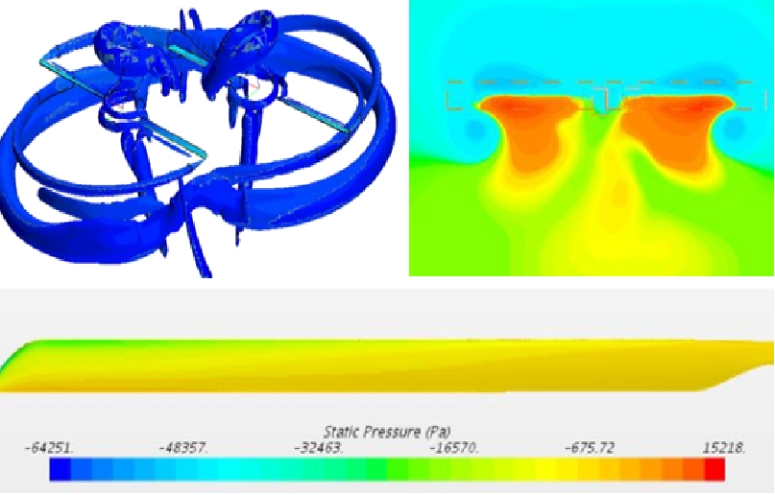 03High-Efficiency Rotor TechnologyThe rotor system adopts lightweight design technology, integrating the advantages of no tail transmission, no need for tail reducer and tail rotor. It avoids the risk of tail rotor failure, improves maneuverability, increases hover efficiency by 10%~15%, and features a compact structure and small overall size, adapting to shipboard environments with limited space.
 -
04Long-Distance High-Power Transmission TechnologyIt adopts high-torque brushless motors combined with high-power ESCs to achieve linear control of power output; the dual-motor redundant architecture can still maintain stable power output in case of failure; the lightweight transmission structure reduces aircraft weight and enhances transmission strength.

-
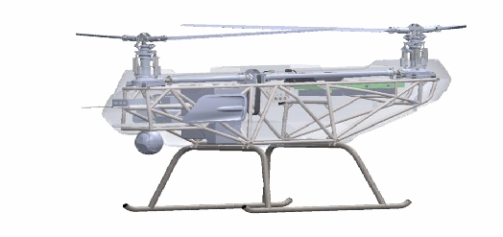 05Airframe Lightweight TechnologyComposite materials are used as the main load-bearing structure, reducing weight while improving strength; the modular design facilitates rapid replacement of mission modules and reduces the weight of redundant structures.
 -
06Power Adaptability Modification TechnologyEquipped with dual-rotor power redundancy configuration, it can automatically redistribute power when a single motor fails, maintaining more than 80% of the load capacity, which is suitable for high-reliability scenarios such as material transportation.